A library received and read in the Church
The Bible, Explained
What it is, how Christian traditions received it, and why canon, edition, and translation all matter — in plain language, no background required.
What is the Bible?
The word “Bible” comes from the Greek biblia — “books.” The Bible is a library of sacred writings, gathered and received over many centuries. It contains many human voices, genres, periods, and settings. Its table of contents and book order differ somewhat among Christian traditions.
Christians receive these writings together as Holy Scripture and read them as a coherent witness to God's saving work fulfilled in Christ. This site uses the 1994 Revised Standard Version Armenian Church Edition as its house reference for English Scripture wording and Armenian Apostolic setting. A complete public claim about that physical volume's book order awaits verification of its table of contents.
“Inspired by God” expresses the Church's conviction that God speaks through Scripture. In the Armenian Church, Scripture is proclaimed in worship and read within apostolic tradition, the Church's councils, and the teaching of the holy fathers. Each book should also be heard in its own historical setting and literary form.

How it's organized
The Bible has two main parts, called “testaments.” The name is connected with covenant: a binding relationship established by God's promises and calling.
The Old Testament — Israel's Scriptures
The Old Testament preserves Israel's witness to creation, covenant, worship, wisdom, justice, exile, and hope. Christians receive these writings as the word of God, attend to their meaning within Israel's story, and also read them in the light of Christ. Exact book order and groupings vary among Jewish and Christian traditions.
Law / Torah
- Genesis to Deuteronomy
- Creation, the patriarchs, the Exodus, covenant, and commandments
Narrative & history
- Joshua and later books
- Israel's life in the land, kings, exile, and return
Poetry & Wisdom
- Includes Job, Psalms, Proverbs, Ecclesiastes, and Song of Solomon; some traditions include additional wisdom books
- Prayer, praise, lament, moral formation, and reflection on suffering and meaning
The Prophets
- Isaiah and the prophetic books
- Covenant faithfulness, justice, repentance, and hope; Christians also hear messianic promise
Why some Old Testaments are longer
Armenian Apostolic, other Orthodox, Catholic, and Protestant traditions did not inherit identical Old Testament tables of contents. Books often called the Deuterocanon or Apocrypha remain part of the Bible in several ancient churches. Book counts can also change depending on whether combined works are counted separately. The table of contents of a named edition is more useful than a number by itself.
The New Testament — Jesus and after
A twenty-seven-book New Testament is common across many Catholic, Eastern Orthodox, Oriental Orthodox, and Protestant editions. Some historic church traditions preserve different canonical practices, so named editions are more precise than saying “all Christians.” These writings include four broad kinds:
The Gospels
- Matthew, Mark, Luke, John
- Four accounts of Jesus' life, death, and resurrection
History
- Acts
- How the church began and spread after Jesus
The Letters
- Pauline, catholic or general, and other apostolic letters
- Writings to particular churches and people that continue to form Christian faith and life
Apocalypse, prophecy & letter
- Revelation
- A symbolic vision of judgment, worship, endurance, and the world God will make new
How the “address” works
A reference like John 3:16 just means: the book of John, chapter 3, verse 16. Chapters and verses were added centuries later as a handy way to find your place — they weren't in the originals. So think of them as page numbers, not part of the message.
The four Gospels
“Gospel” means good news. The four canonical Gospels proclaim the same Jesus with distinct selections, structures, and emphases. Their traditional associations and likely first audiences are matters of history and scholarly discussion, so the summaries below are guides rather than settled biographies of their authors.
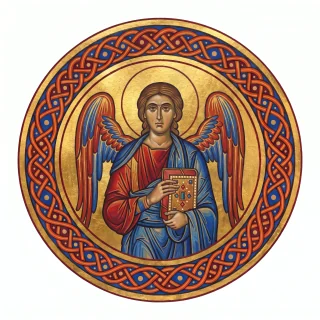
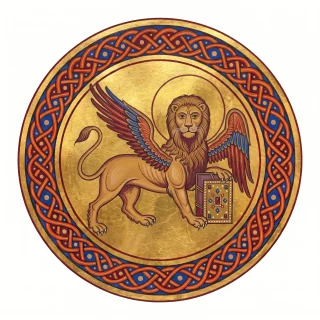
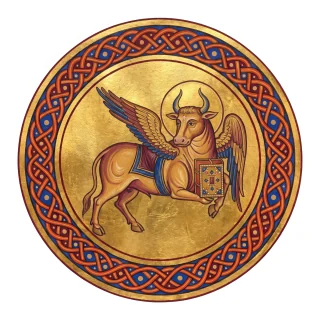
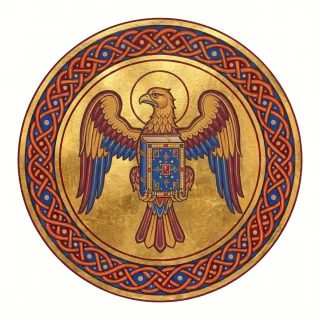
The four evangelists’ symbols, as they open the Armenian Gospel books · digitally generated illustrations commissioned for this site
| Gospel | Traditional emphasis / proposed setting | Shows Jesus as | Helpful for |
|---|---|---|---|
| Matthew | Often connected with a Jewish-Christian setting | The Messiah and teacher in sustained conversation with Israel's Scriptures | Following Scripture, Kingdom teaching, and discipleship |
| Mark | Ancient tradition connects it with Peter and Rome | The suffering Messiah whose authority is revealed in service | A fast, vivid first read — the shortest Gospel |
| Luke | Addressed to Theophilus; written with an orderly historical purpose | The Savior who welcomes the poor, the outsider, and the overlooked | Rich narrative detail and Jesus' compassion |
| John | Written so readers may believe and have life in Christ | The eternal Word made flesh | Reflecting on who Jesus is and why he came |
If you only read one thing in the whole Bible to meet Jesus, start with one of these four.
How we got the Bible
A fair question anyone might ask is: How did these texts reach us after so long? The evidence is substantial, but it deserves a careful answer rather than a slogan.


The original languages
Most of the Old Testament was written in Hebrew (with some Aramaic), and the New Testament in Greek. Most modern English translations work primarily from scholarly editions of those language traditions; particular editions may also consult ancient Greek, Syriac, Latin, Armenian, or other witnesses.
The manuscripts
We do not possess the original handwritten documents. Instead, scholars compare thousands of Greek New Testament manuscripts — from small fragments and lectionaries to fuller codices — together with ancient translations and quotations. The witnesses differ in date, completeness, and wording. Their abundance makes the history of the text unusually well documented, while textual criticism is still needed to evaluate variants.
The Dead Sea Scrolls
Beginning in 1947, ancient scrolls were found in caves near the Dead Sea. They include biblical manuscripts roughly a thousand years older than the medieval Hebrew copies once used for most comparison. The scrolls show substantial continuity, but also thousands of variants and more than one textual form. They illuminate a real history of careful transmission, difference, and revision — not perfect letter-for-letter sameness.
How the canon was received
The biblical canon was not fixed everywhere in one vote or at one moment. Books were copied, read in worship, debated, and received over centuries, and regional Christian traditions inherited different canonical practices. A twenty-seven-book New Testament is common across many Catholic, Eastern Orthodox, Oriental Orthodox, and Protestant editions, but historic exceptions remain. This site names its Armenian Church reference openly and treats precise canon and order claims as edition-specific.
A note on different Bibles
Different book counts do not make one community's Bible a fraud. They reflect distinct histories of reception, grouping, and worship. Translations can also differ in source text and wording. Readers should know which canon, edition, and translation they are using; ours is named in our Scripture source policy.
Sources checked 15 August 2026: the Israel Antiquities Authority's Dead Sea Scrolls introduction documents both continuity and textual difference; the Eastern Diocese explains the sources used in its 2021 English lectionary; and the Ethiopian Orthodox Tewahedo Church's canon page illustrates why New Testament exceptions must be named rather than erased. See also this site's quotation ledger through Scripture Sources.
Translation, edition, and canon
Walk into a bookstore and you will see labels such as RSV, NRSV, KJV, NKJV, NIV, and NLT. Three different questions are hiding inside the word “version”:
- Translation: How were the Hebrew, Aramaic, and Greek texts rendered in English?
- Edition: Which revision, spelling, notes, book order, and supplementary material does this volume use?
- Canon: Which books does this Christian tradition receive and print as Scripture?
English Bibles translate closely related — but not always identical — source-text editions. Translators also make different judgments about wording, style, canon, and how explicit interpretation should be. These are real differences, but they can be explained without treating other Christian traditions as suspect.
This spectrum is only approximate. Every translation must interpret. A more formal translation often preserves sentence structure and repeated terms; a more idiomatic translation more readily reshapes them into natural English. Source texts, canon, revision date, reading level, and the translators' church and scholarly setting matter too.
Armenian Apostolic English references
| Reference | English text | Use | Good to know |
|---|---|---|---|
| 1994 Armenian Church Edition | Revised Standard Version | This site's house reference | An Armenian Church edition of an English translation, not a translation from Armenian. Its photographed title and copyright pages are verified; its complete table of contents still needs a physical-edition check. |
| 2009 Armenian Church Edition | New Revised Standard Version | A newer single-volume English option | Published for Armenian Church readers with NRSV text and Armenian editorial material; consult the physical table of contents for its exact order. |
| 2021 English Lectionary | NKJV, with SAAS for deuterocanonical readings | Public worship in the Eastern Diocese | This is a liturgical reading book and a two-source policy, not one complete Bible translation; the two-source division is stated on the lectionary's own copyright page. |
Several other common English choices
| Translation | General character | Good to know |
|---|---|---|
| KJV | Historic, formal English | Influential, with four-century-old vocabulary and a different source-text tradition from many newer translations. Special publication rights still apply in the United Kingdom. |
| NKJV | Formal, traditional English | A substantial modern revision in the KJV textual tradition, not merely a spelling update. |
| NRSVue | Modern ecumenical and scholarly | Available with a broad Apocrypha; it is newer than the NRSV text in the 2009 Armenian Church Edition. |
| NIV / CSB | Moderately idiomatic | Readable contemporary Protestant translations; their standard editions use the Protestant canon. |
| NLT | Meaning-based, highly readable | Helpful for extended reading, with more interpretive phrasing than formal translations. |
| NABRE | Modern Catholic study Bible | Includes the Catholic canon and extensive notes; its text and liturgical use are distinct questions. |
| CEB / GNT | Idiomatic, ecumenical English | Often accessible for new readers; editions with deuterocanonical books are available. |
| NET | Modern evangelical translation | Especially useful for its extensive translator notes; its standard edition uses the Protestant canon. |
| WEB Ecumenical | Modern and public domain | Legally easy to quote online and available with deuterocanonical books, but it is not an Armenian Church edition. |
| The Message | Single-author idiomatic paraphrase | Eugene Peterson's strongly interpretive rendering can be a companion for reflection, but it is not a formal base text for close study. |
There is no single best choice for every reader or purpose. Also consider audio availability, large-print or dyslexia-friendly formats, reading level, first language, study notes, and whether the edition contains the books used in your church.
What does this site use?
We have chosen one house reference: the 1994 RSV Armenian Church Edition. Scripture quotations reproduce RSV wording and are marked (RSV). The volume anchors this site's Armenian setting, but its exact table of contents must be checked before we publish a complete canon or order. For worship, follow the lectionary and Bible used by your parish. For fuller details, see Scripture Sources.
Where to start reading
Reading straight from Genesis can be fruitful, but many newcomers find a Gospel-first route easier. Here is one possible on-ramp, not the only correct order:
- Start with the Gospel of Mark — the shortest Gospel and a vivid first read, often manageable in one or two sittings.
- Then the Gospel of John — it offers sustained reflection on who Jesus is and why he came.
- Then the Psalms — ancient prayers and songs spanning praise, grief, anger, repentance, trust, and hope.
- Then Acts — the story of the early Church's witness from Jerusalem through Judea and Samaria and into much of the Roman world.
Read manageable passages, notice their setting and genre, keep a list of questions, and bring those questions to prayer, reliable study, and a trusted priest or teacher.